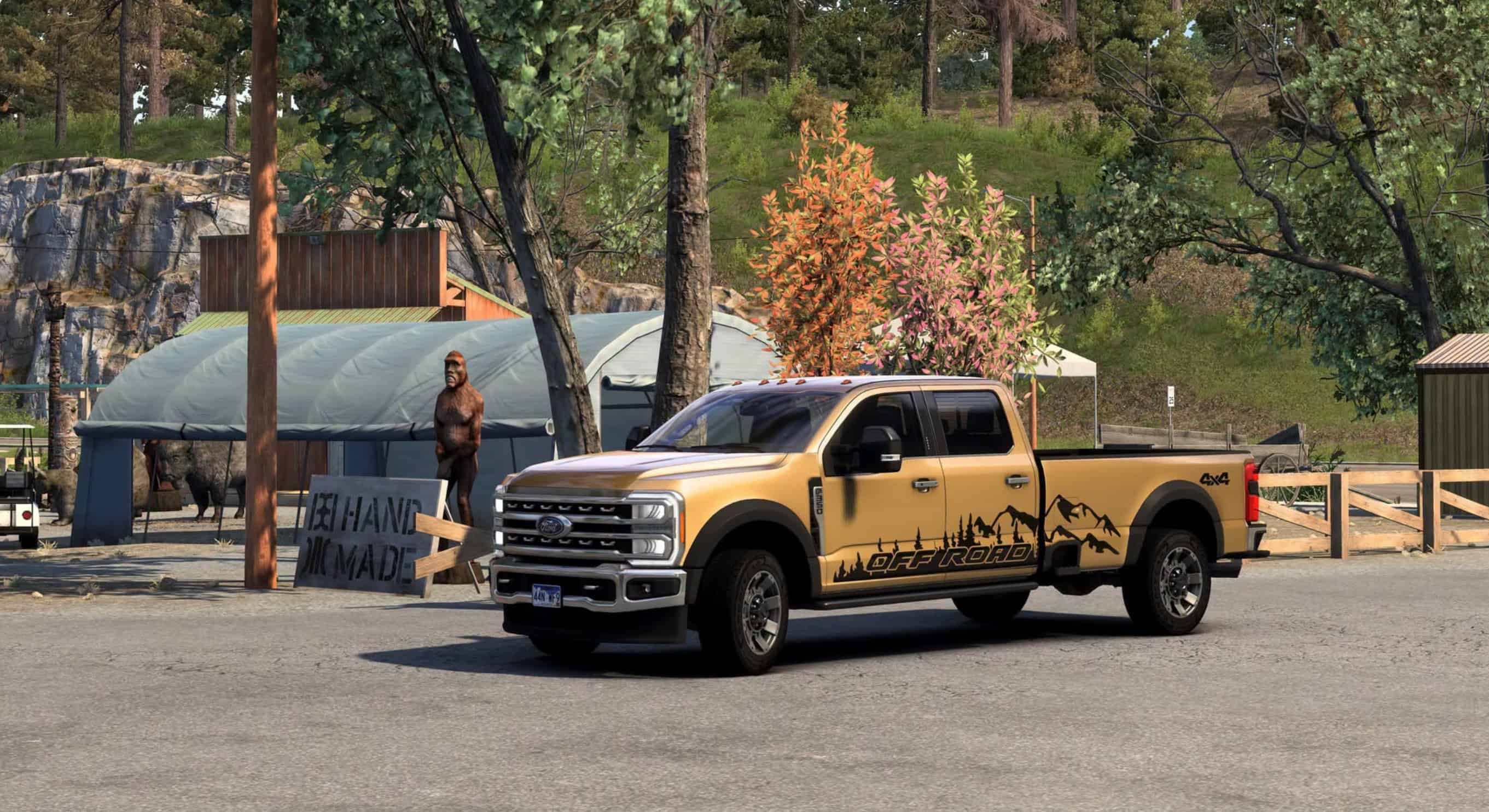
The arrival of Car Mode through Road Trip means American Truck Simulator needs fatigue rules that work for more than professional truck driving. A private car driver should not be treated exactly like a trucker operating under regulated working hours, so SCS Software has split the existing system into two separate parts.
The updated setup uses Rest State and Mandatory Breaks. Rest State follows the player across different modes, while Mandatory Breaks depend on the type of driving being performed. This also means changing modes within the same profile or returning to a Save Game does not turn Car Mode into an easy way to escape the character’s existing need for rest.
Rest State follows the player
Rest State represents how tired the player’s character currently is. It belongs to the profile rather than to a particular vehicle, so switching from a truck into a car does not reset fatigue.
If the character has already spent a long time on the road in Truck Mode, that tiredness remains when Car Mode is selected. The same applies in the opposite direction, keeping fatigue connected to the driver rather than treating each mode as a separate character.
This approach is important because Mode Switch allows players to move between different types of gameplay without starting a new profile. Without a shared Rest State, changing vehicles could otherwise become a simple workaround whenever the player became tired.
Mandatory Breaks work differently
Mandatory Breaks cover the legally required rest periods associated with professional driving. These are separate from the general tiredness represented by Rest State, which allows ATS to apply different rules depending on what the player is driving.
Truck drivers remain subject to Mandatory Breaks, while drivers using Car Mode are not. A player travelling in a car can still become tired and need rest, but there is no additional commercial driving restriction forcing a mandatory stop.
The distinction makes Car Mode more appropriate for ordinary road travel without removing fatigue completely. Players still need to manage the condition of their character, but the rules no longer assume every journey is being made as part of a professional trucking shift.
Why the change matters for Mode Switch
Road Trip adds a separate career to the same American Truck Simulator profile. Truck Mode and Car Mode have different jobs and progression systems, but several parts of the game remain connected between them.
Fatigue follows the same logic. Rest State is shared because it represents the player character, while Mandatory Breaks are tied to the kind of driving currently being performed. This keeps the system consistent without applying trucking regulations to a private car journey.
The change is another example of how Road Trip requires more than simply adding cars to the ATS map. Existing systems are being adjusted so Car Mode can behave differently while still feeling like part of the same profile and game world.